
Collection: Microsurgical Needle Holders
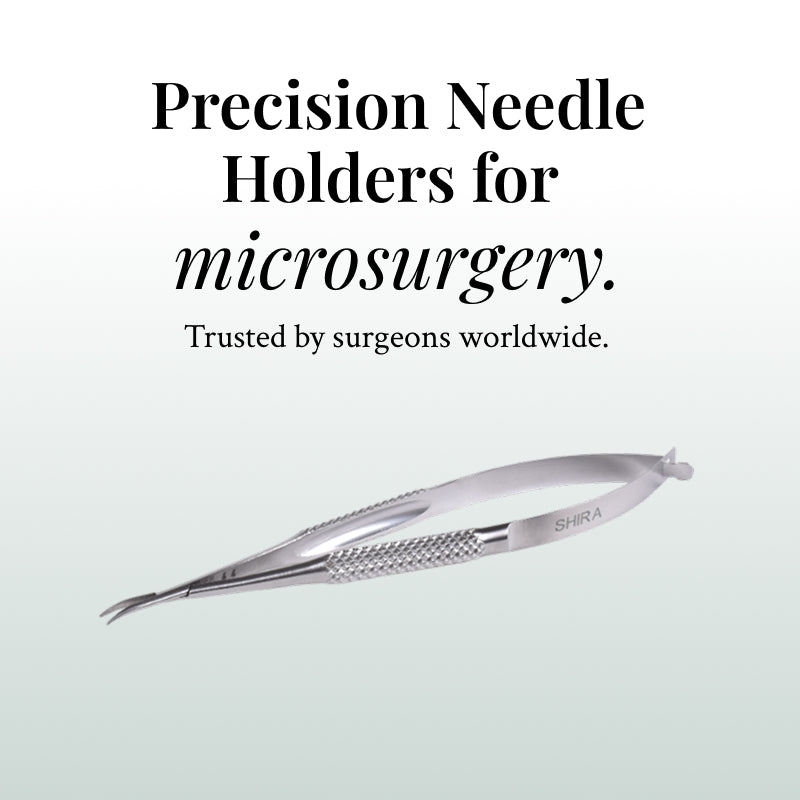
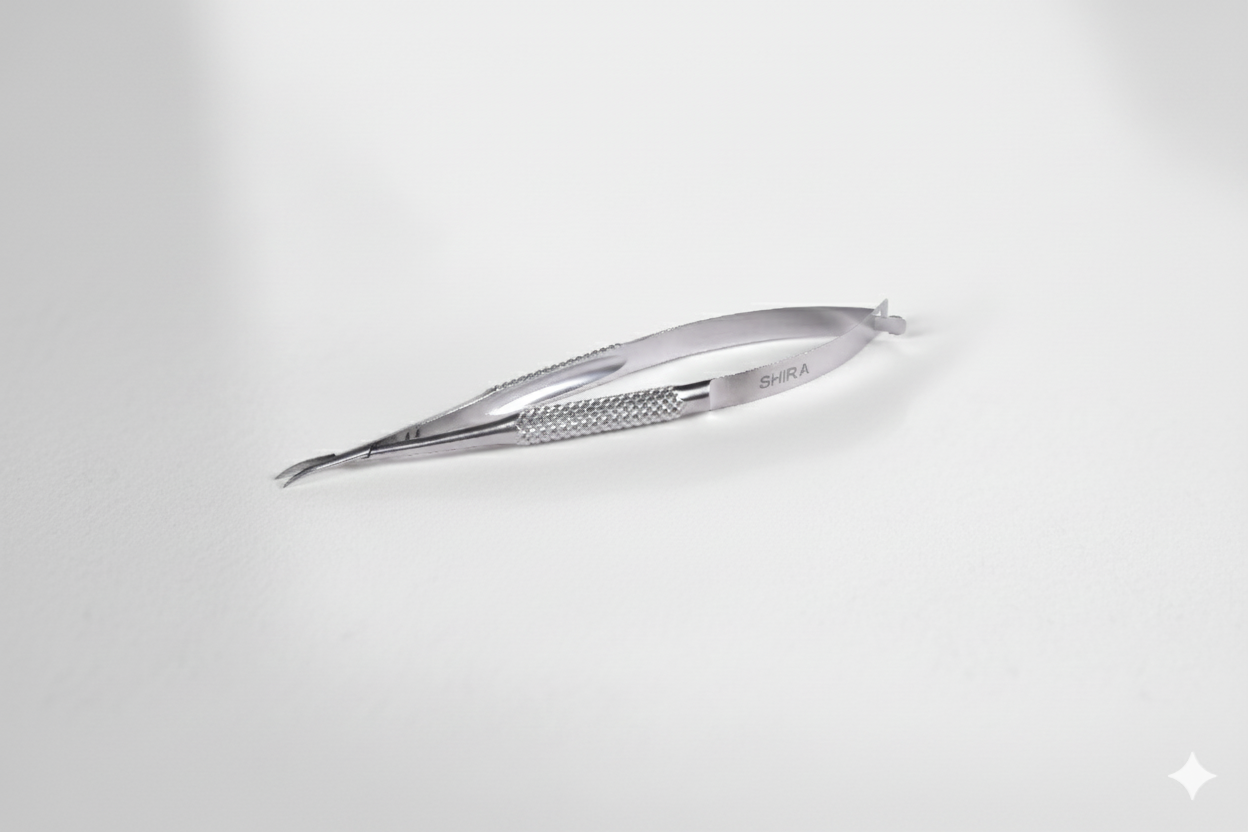
Precision spring-loaded microvascular needle holders engineered for suturing vessels as small as 0.3mm. Held like a pencil for natural hand position, with rounded ergonomic handles and thin curved or straight jaws that deliver parallel jaw closure across the full jaw length. Non-locking and locking ratchet variants. Available in Titanium, Stainless Steel, and Coated Stainless Steel.
3-Jaw Approximator Micro Surgical Clamps
Frequently Asked Questions: Microsurgical Instruments
How should needle holders be cleaned and maintained?
After each case, rinse the holder to remove blood and tissue, then place it in a cleaning solution. Because they are made from high‑grade stainless steel, they can be autoclaved; proper cleaning and sterilization allow them to be reused for many years.
Are there size options?
Yes. Common lengths include 5¼ inches (14 cm) and 7⅛ inches, with options for curved jaws, curved jaws with locks or straight jaws. Selecting the right length and jaw style depends on the depth and angle of the surgical field.
What materials are Shira’s needle holders made from?
High‑grade surgical stainless steel or titanium provides rust resistance, lightweight handling and high tensile strength. These materials allow the instruments to be sterilized easily and reused without corrosion.
How are these different from standard needle drivers?
Unlike larger needle drivers, microsurgical needle holders have slender jaws (0.6 mm tips) and round handles for better control and precision. They often have spring handles or a lock mechanism, which securely holds the needle during delicate procedures without requiring continuous manual pressure, enhancing control and precision. They are available with curved or straight jaws to facilitate suturing in confined spaces.
What are microsurgical needle holders used for?
Microsurgery needle holders are small hemostat‑like instruments used to grasp and drive fine suturing needles during delicate procedures. They are widely used to close wounds and place microvascular or nerve sutures.
Insights & Research
-
Joining 1 mm wide blood vessels
Discover the groundbreaking science behind microsurgical vessel anastomosis and how innovative tools like the three-jaw clamp have revolutionized reconstructive surgery. From precise vessel eversion to ensuring flow patency, explore the...
Joining 1 mm wide blood vessels
Discover the groundbreaking science behind microsurgical vessel anastomosis and how innovative tools like the three-jaw clamp have revolutionized reconstructive surgery. From precise vessel eversion to ensuring flow patency, explore the...
-
The Salvage Window: Why the First 24 Hours Defi...
There’s a narrow window, often just the first 24 hours, where a failing flap can still be saved. After that, outcomes drop sharply.This guide breaks down what truly determines DIEP...
The Salvage Window: Why the First 24 Hours Defi...
There’s a narrow window, often just the first 24 hours, where a failing flap can still be saved. After that, outcomes drop sharply.This guide breaks down what truly determines DIEP...
-
The Complete Surgeon's Guide to DIEP Flap Success
What truly determines DIEP flap success? From vessel handling to intraoperative decisions, this guide breaks down the critical factors that impact outcomes.
The Complete Surgeon's Guide to DIEP Flap Success
What truly determines DIEP flap success? From vessel handling to intraoperative decisions, this guide breaks down the critical factors that impact outcomes.