
Collection: Vessel Dilators
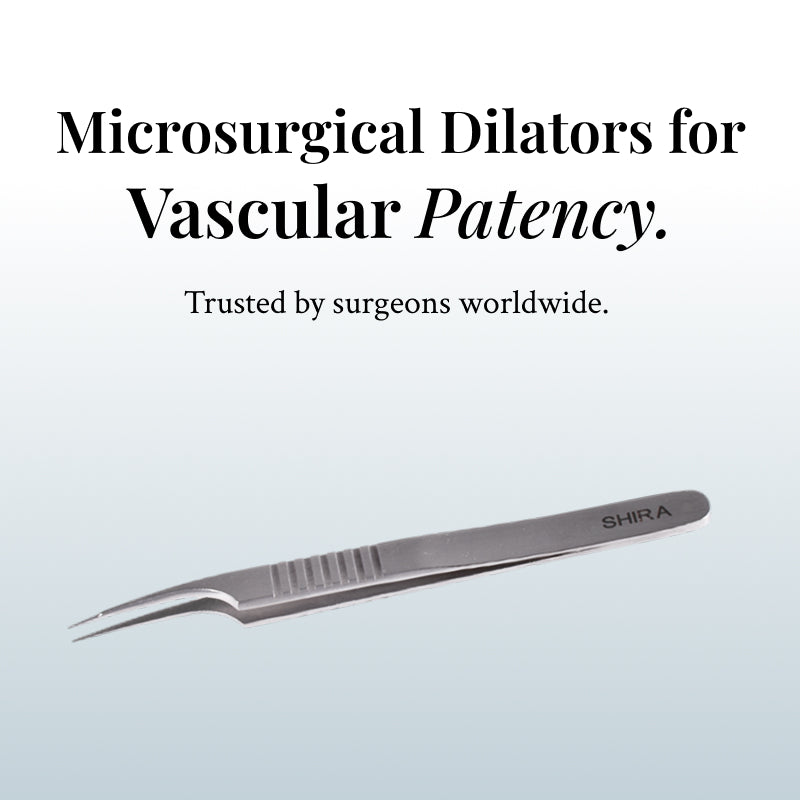
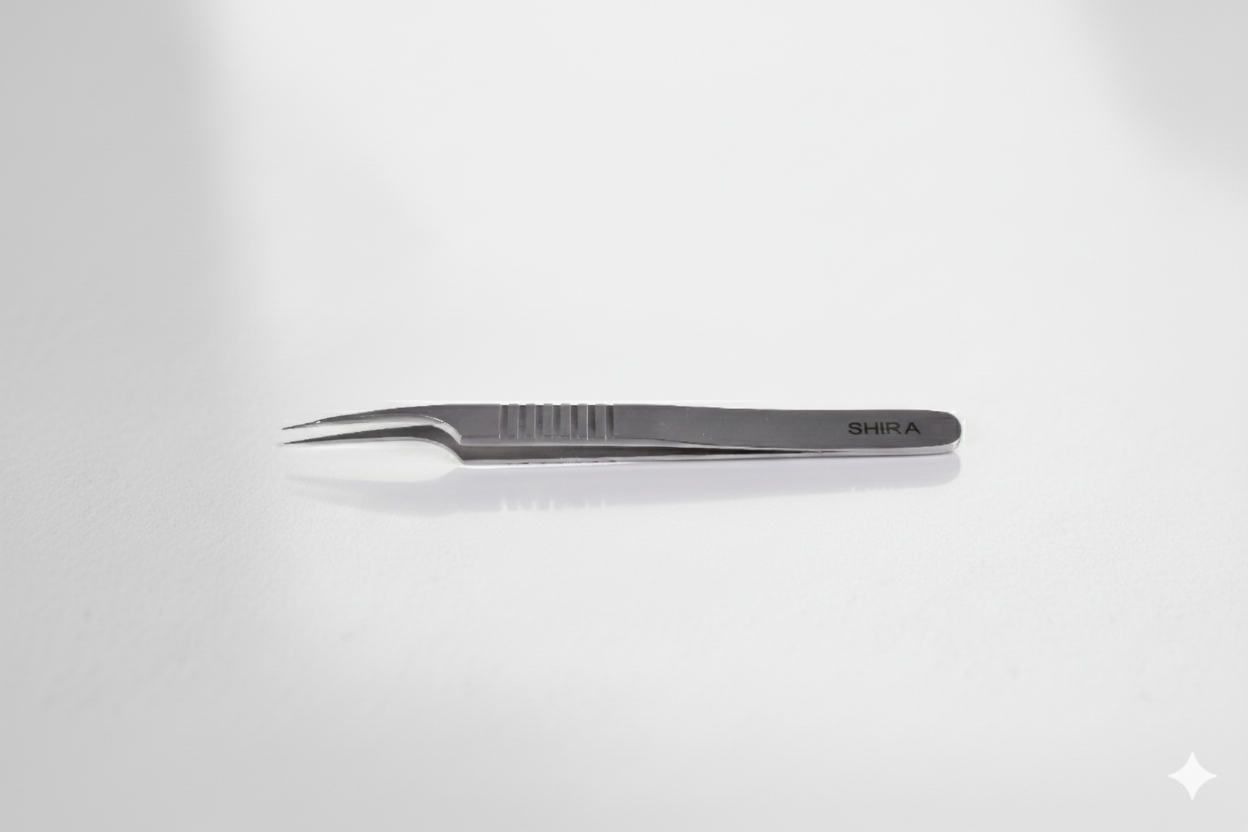
Modified jeweler's forceps purpose-built for gentle intraluminal vessel dilation. Slender, smoothly polished, non-tapering tip angled at 10-20 degrees for enhanced maneuverability and visibility. Essential for preparing vessel ends prior to anastomosis. Regular and Fine tip variants in Titanium, Stainless Steel, and Coated Stainless Steel.
3-Jaw Approximator Micro Surgical Clamps
Frequently Asked Questions: Microsurgical Instruments
What are the indications for Shira’s vessel dilators?
Indications include enlarging or calibrating vessels during coronary artery bypass grafting, angioplasty, or other microsurgical procedures; locating vessel orifices; tracing abnormal vessel courses; and performing intraluminal maneuvers to evaluate or prepare the vessel.
What materials are used to manufacture vessel dilators?
They are typically made from ASTM F 899 surgical stainless steel, providing durability and corrosion resistance. Some manufacturers also offer titanium versions for lighter weight and reduced magnetic interference, so it is important to consult the manufacturer for details on these specialized instruments.
Are there different models?
Yes. Vessel dilators come in various lengths, diameters and tip shapes (e.g., olive, straight or angled) to match the vessel size and surgical procedure. Surgeons select a model based on the anatomy they are working with.
How does a vessel dilator work?
Dilators are reusable forceps with slender, often olive‑shaped tips. They are inserted into the vessel lumen to gently stretch or locate the orifice, trace the vessel course, and measure the annulus or lumen diameter without causing trauma.
What is a micro vessel dilator used for?
A vessel dilator is a surgical instrument used to enlarge or calibrate small blood vessels. It is commonly employed to verify patency during coronary artery bypass, angioplasty and other vascular procedures.
Insights & Research
-
Joining 1 mm wide blood vessels
Discover the groundbreaking science behind microsurgical vessel anastomosis and how innovative tools like the three-jaw clamp have revolutionized reconstructive surgery. From precise vessel eversion to ensuring flow patency, explore the...
Joining 1 mm wide blood vessels
Discover the groundbreaking science behind microsurgical vessel anastomosis and how innovative tools like the three-jaw clamp have revolutionized reconstructive surgery. From precise vessel eversion to ensuring flow patency, explore the...
-
The Salvage Window: Why the First 24 Hours Defi...
There’s a narrow window, often just the first 24 hours, where a failing flap can still be saved. After that, outcomes drop sharply.This guide breaks down what truly determines DIEP...
The Salvage Window: Why the First 24 Hours Defi...
There’s a narrow window, often just the first 24 hours, where a failing flap can still be saved. After that, outcomes drop sharply.This guide breaks down what truly determines DIEP...
-
The Complete Surgeon's Guide to DIEP Flap Success
What truly determines DIEP flap success? From vessel handling to intraoperative decisions, this guide breaks down the critical factors that impact outcomes.
The Complete Surgeon's Guide to DIEP Flap Success
What truly determines DIEP flap success? From vessel handling to intraoperative decisions, this guide breaks down the critical factors that impact outcomes.